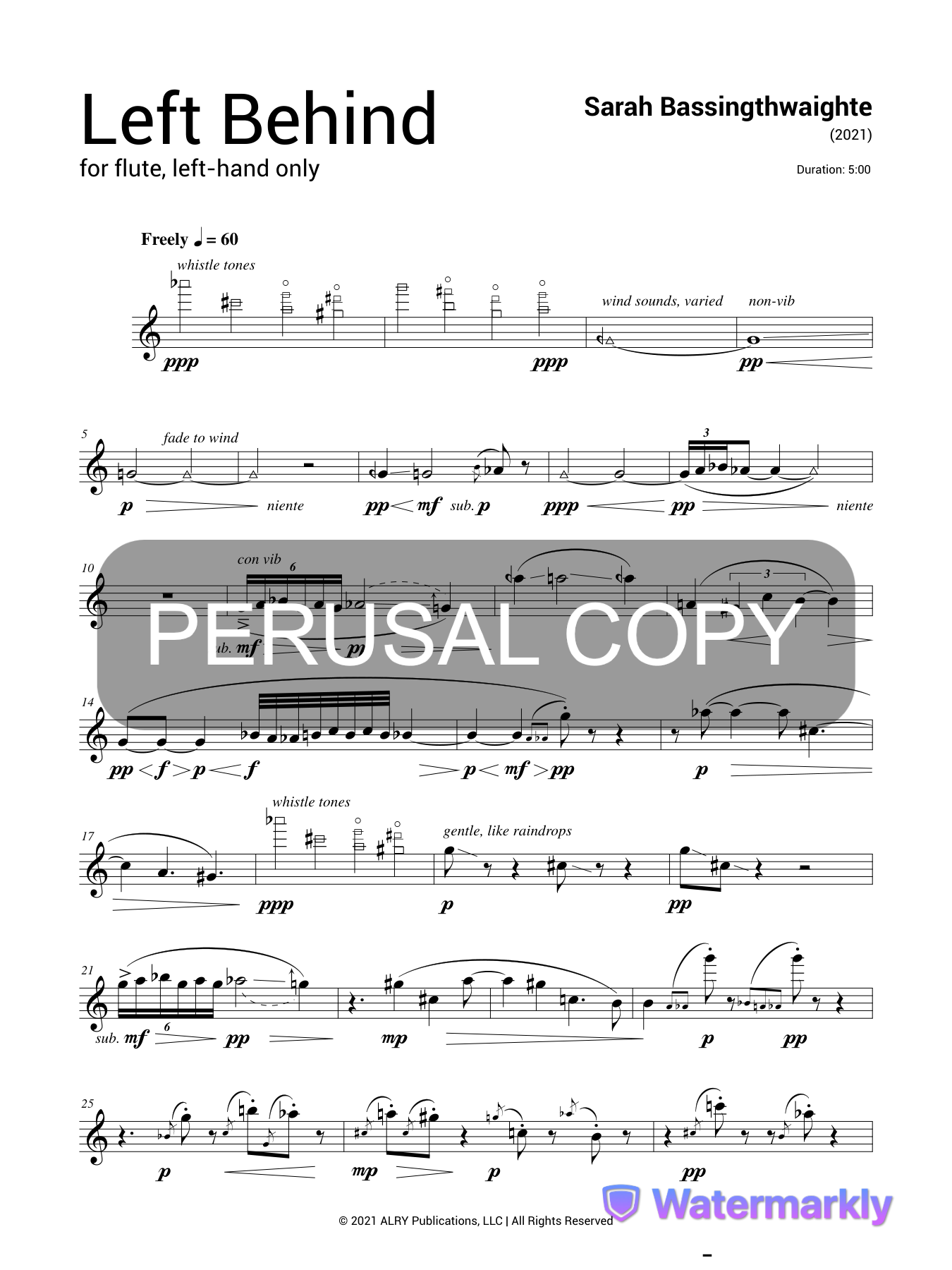
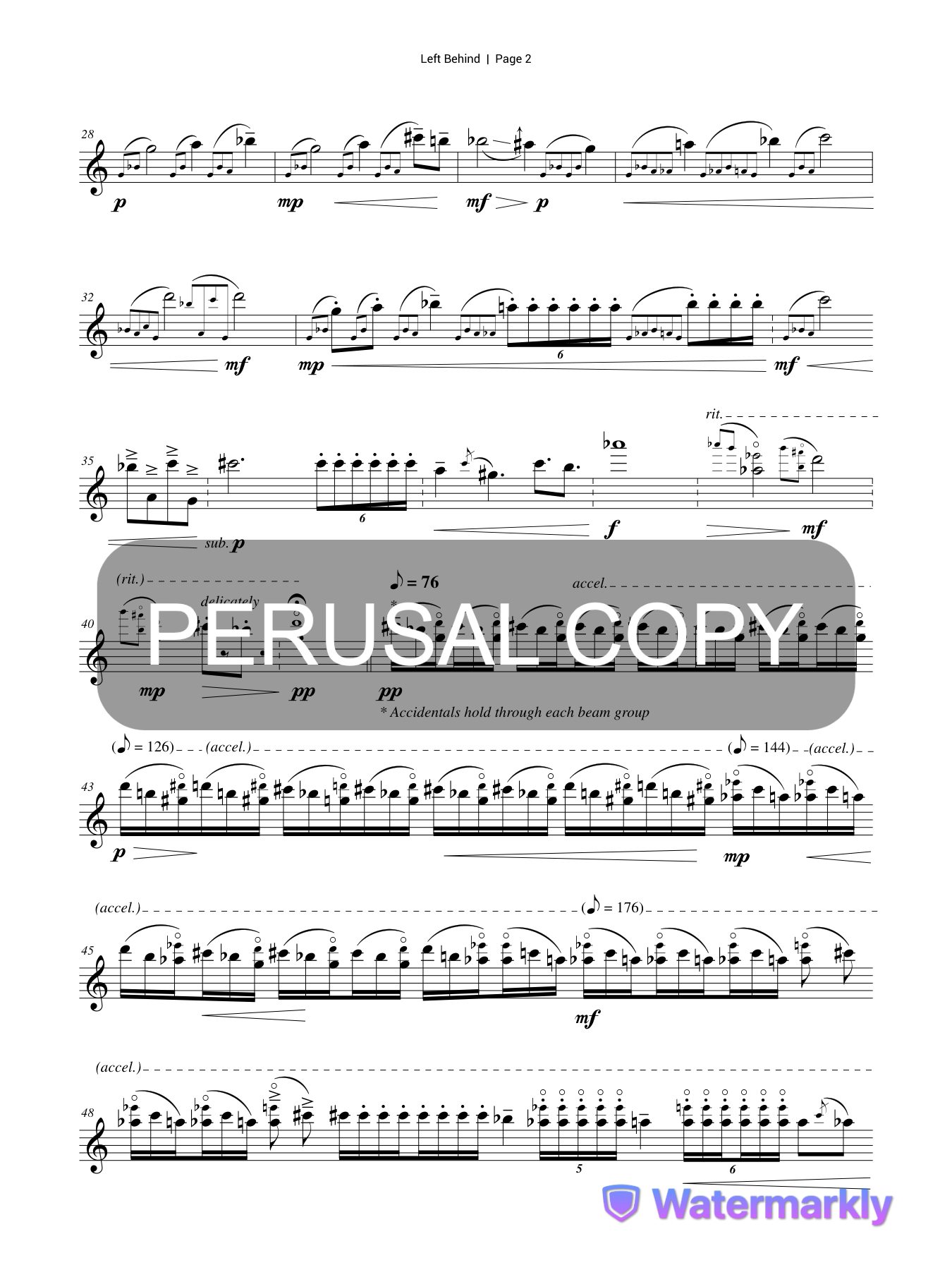
Solo Flute (left-hand alone)
(2021)
8 minutes
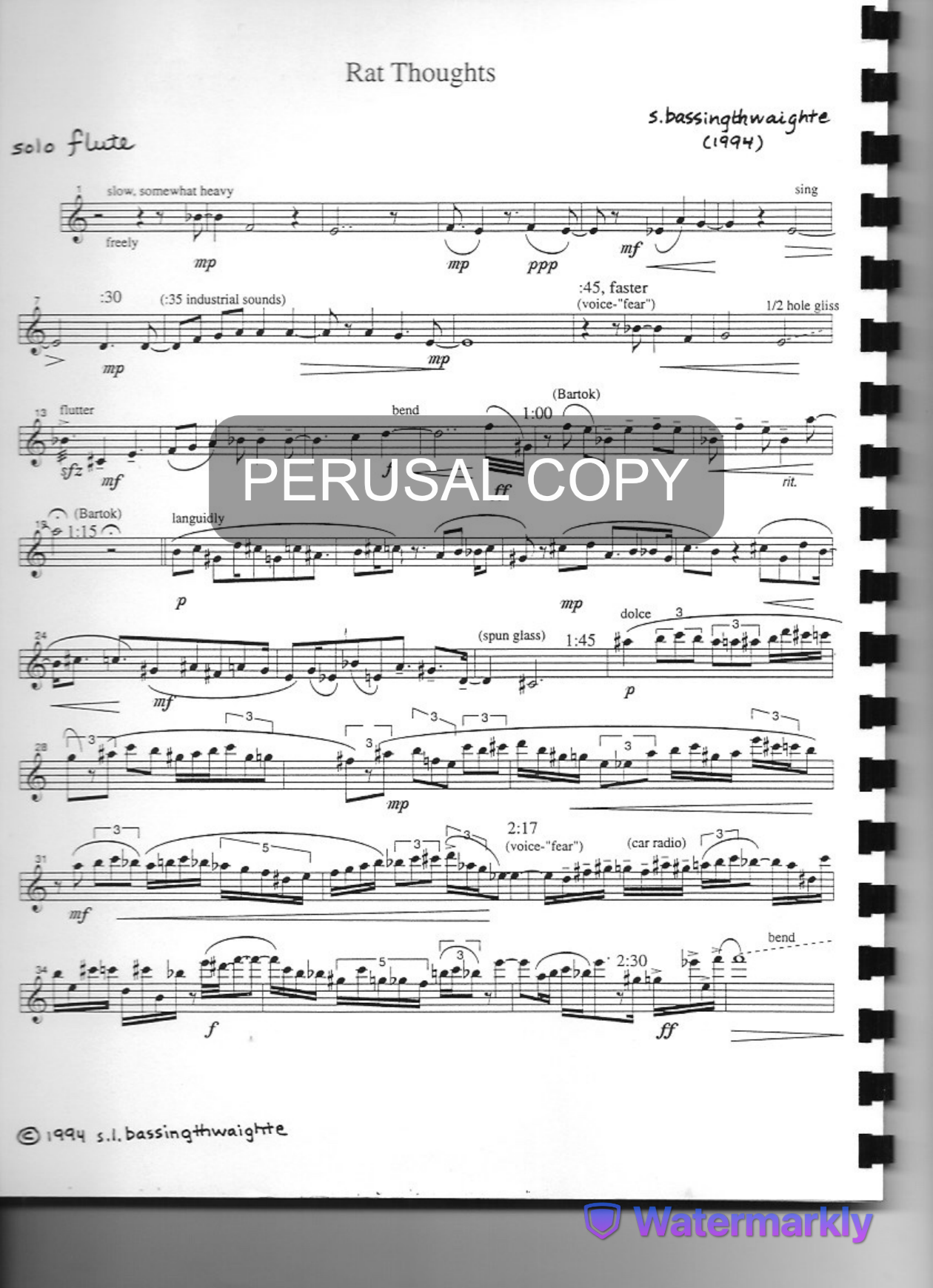
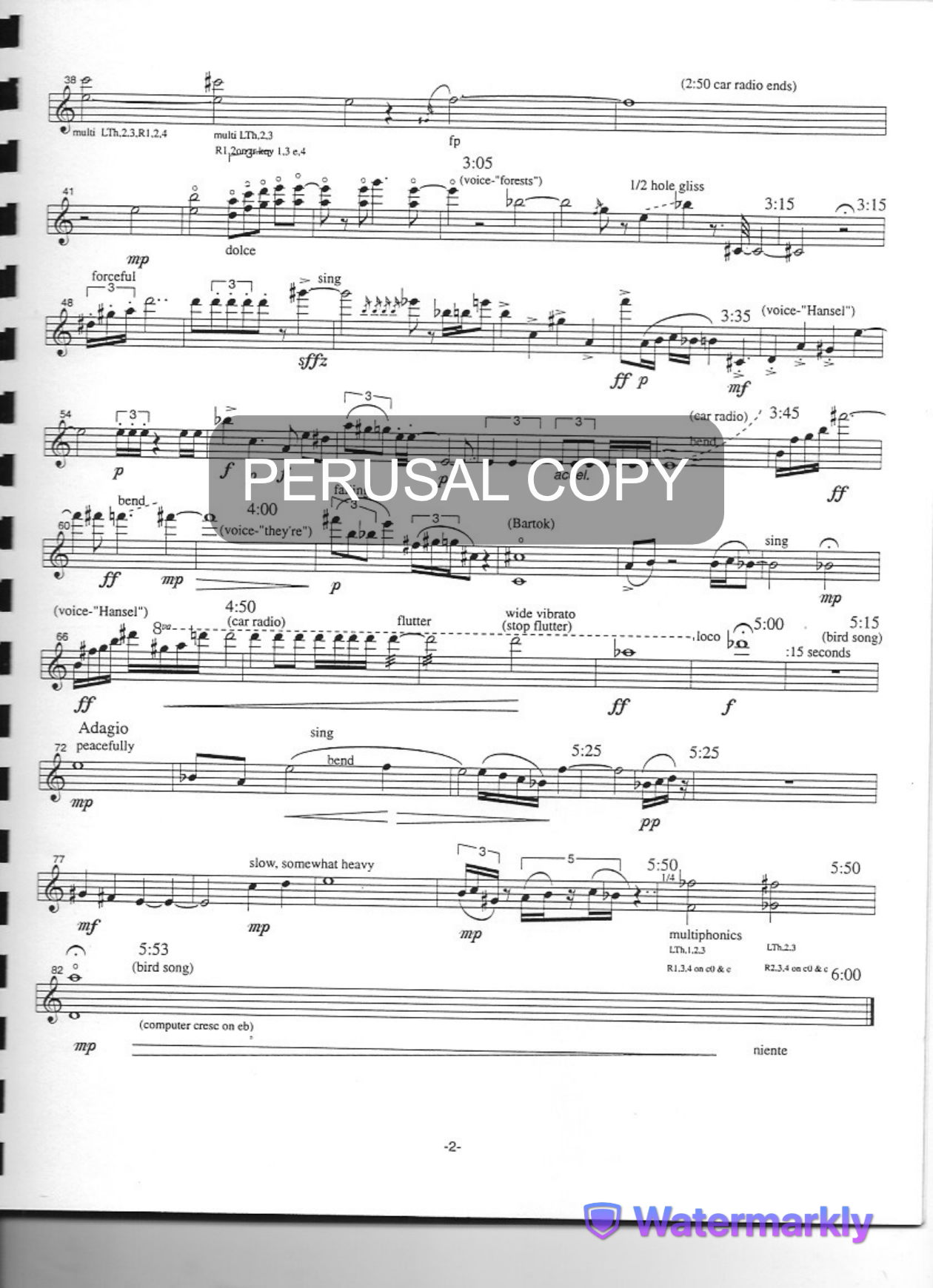
I was approached with the idea of composing a piece for solo flute using only the left hand. This could be played by someone with a right-hand or wrist injury, or for anyone interested in trying a new flute adventure. My first thought is that the options would be very limited, and then I thought of something Stravinsky said that has rolled around in my head for years: "The more constraints one imposes, the more one frees one's self. And the arbitrariness of the constraint serves only to obtain precision of execution." He spoke often about the necessity of imposing restrictions to creating great music.
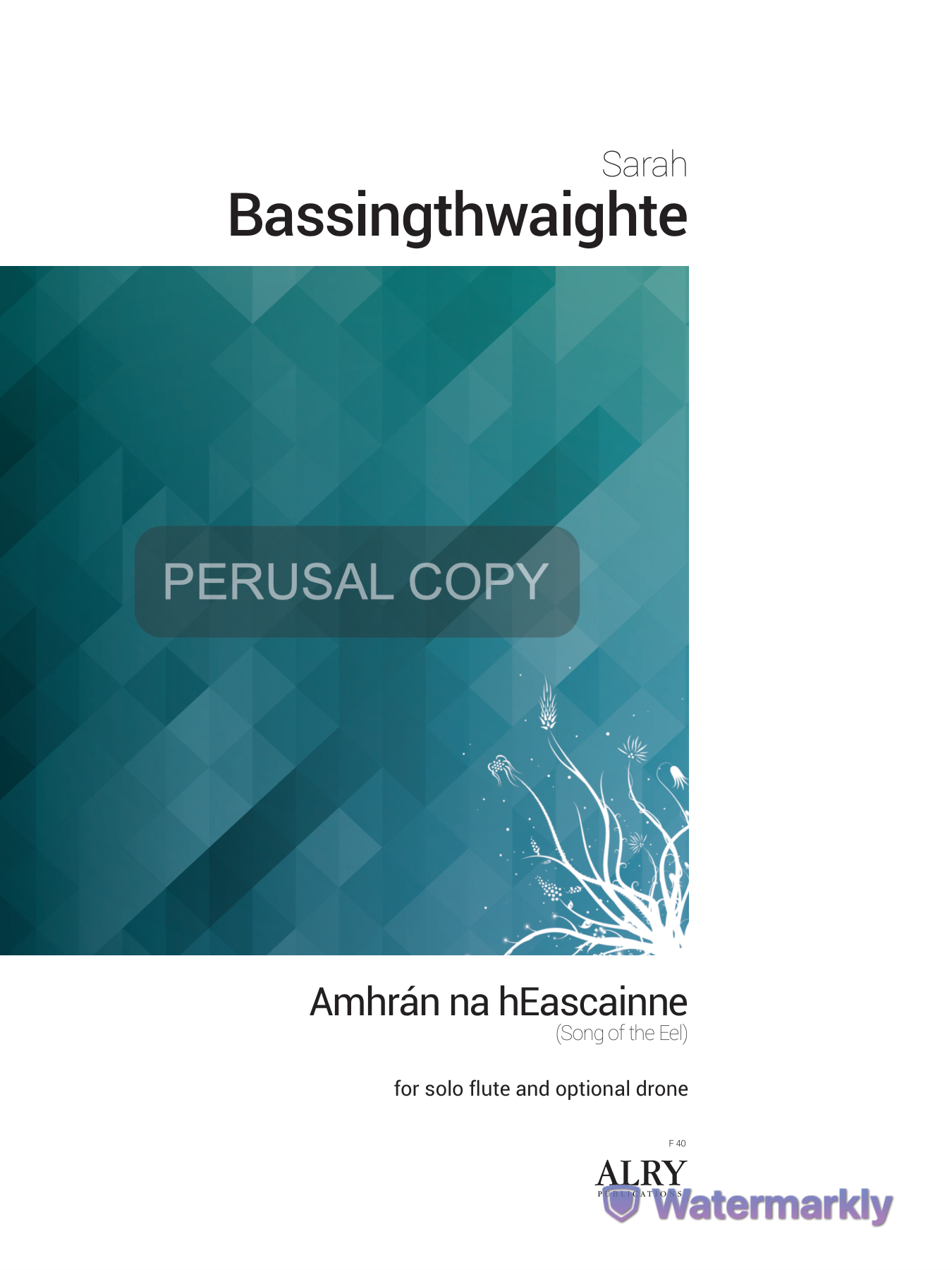
Solo Flute or Alto Flute (optional drone)
(2020)
5 minutes
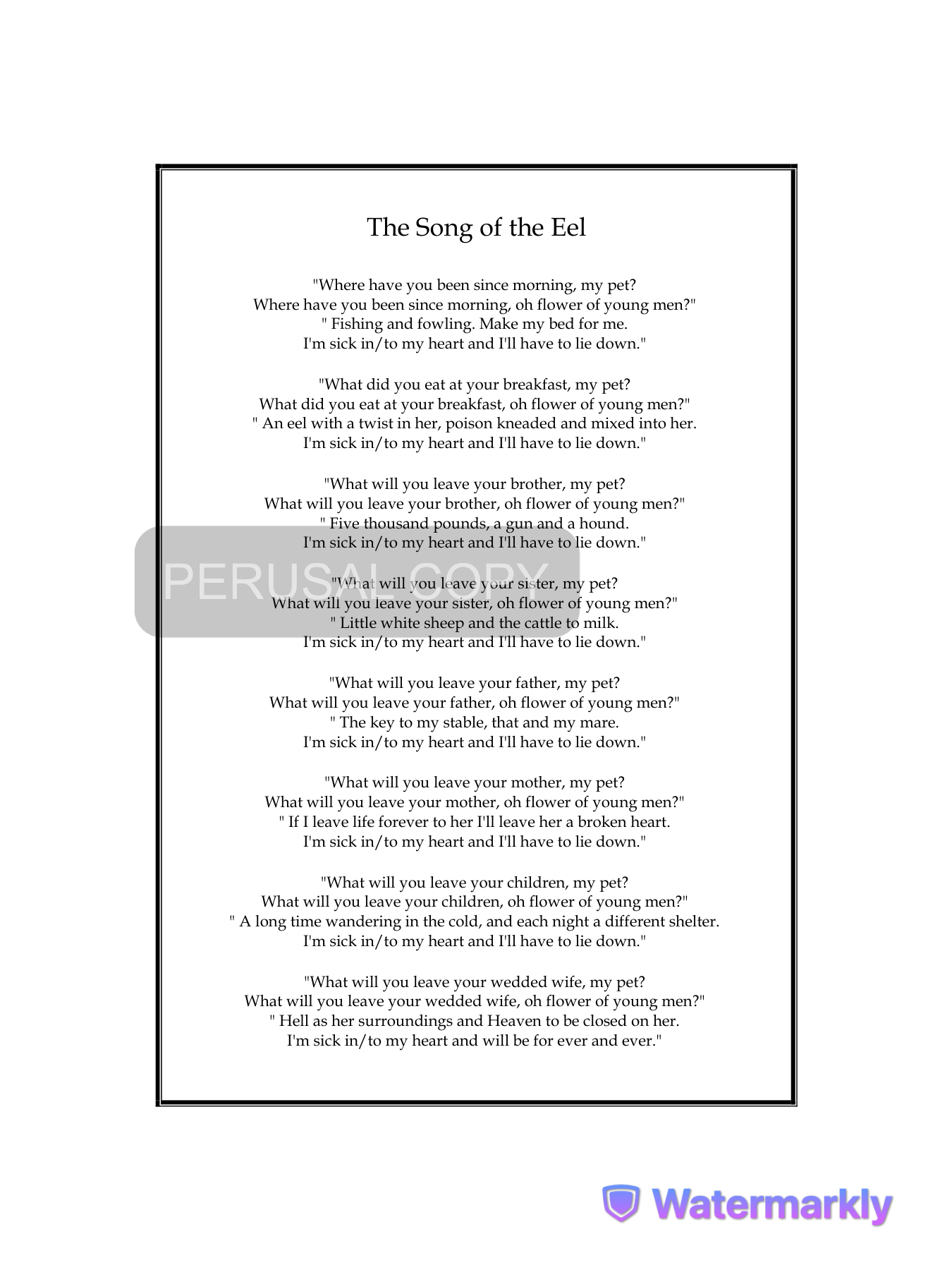
Amhrán na hEascainne (Song of the Eel) is based on the old Irish song of the same name. My introduction to this song came in the form of Sean-nos, a style of unaccompanied Irish vocal music. This piece can be performed in a few ways: as a solo C-flute piece, as a solo alto flute piece, and either of those with a drone. The drone itself can be done a number of ways. If it's a one-note drone, then any E will work (lower than the flute is optimal). If possible, a two-note drone is even better, and should be E and B, (again lower than the flute is best). The drones could be played by a keyboard, by a cellist, by other flutists (as in a flute choir performance), or other possibilities that I haven't thought of.
The style of this piece is very free, expressive, improvisatory, and dramatic. Most of the barlines have been removed to help prevent a strong sense of pulse. There are a small number of extended techniques for the solo C-flute version, including pitch bends and color tones.
Solo Contrabass
(2012)
8 minutes
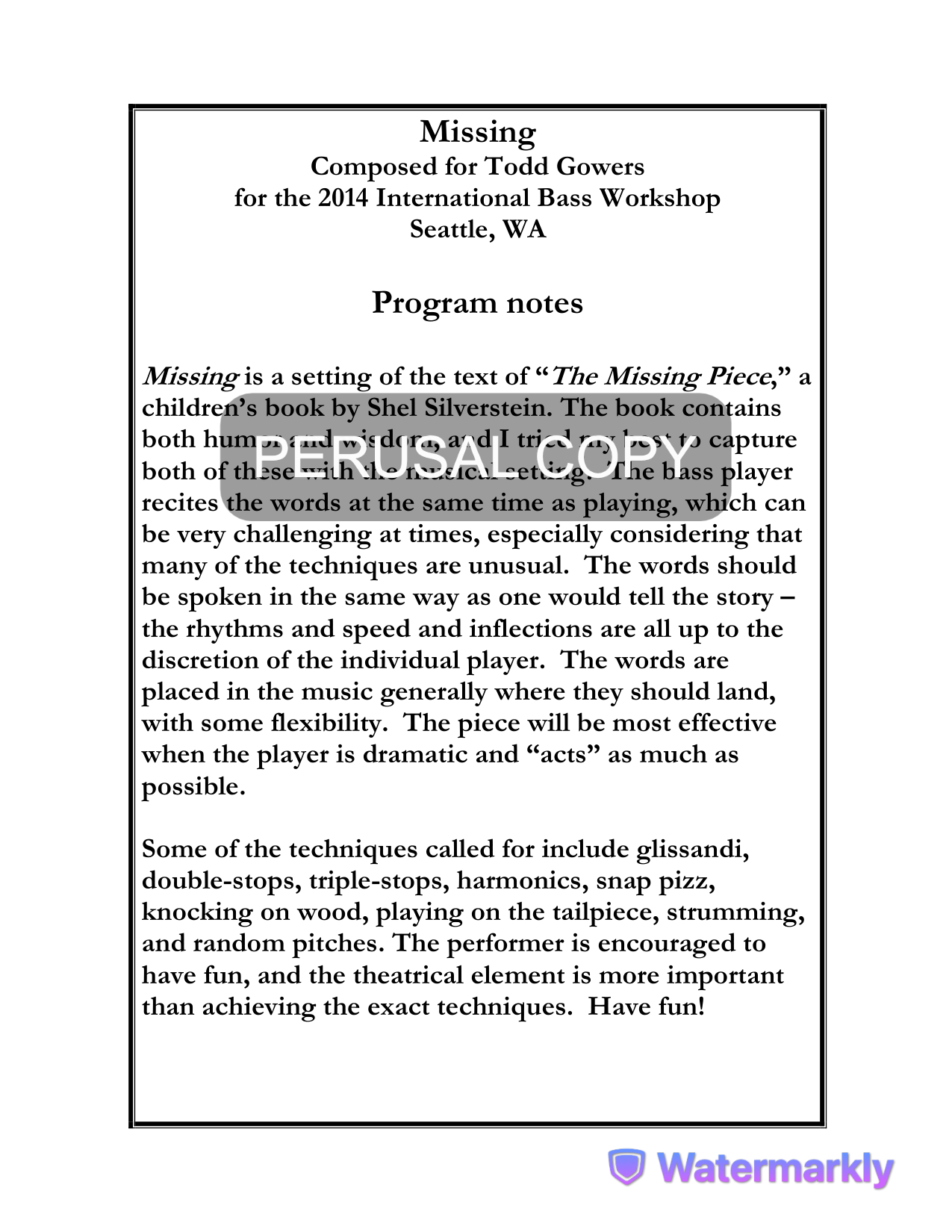
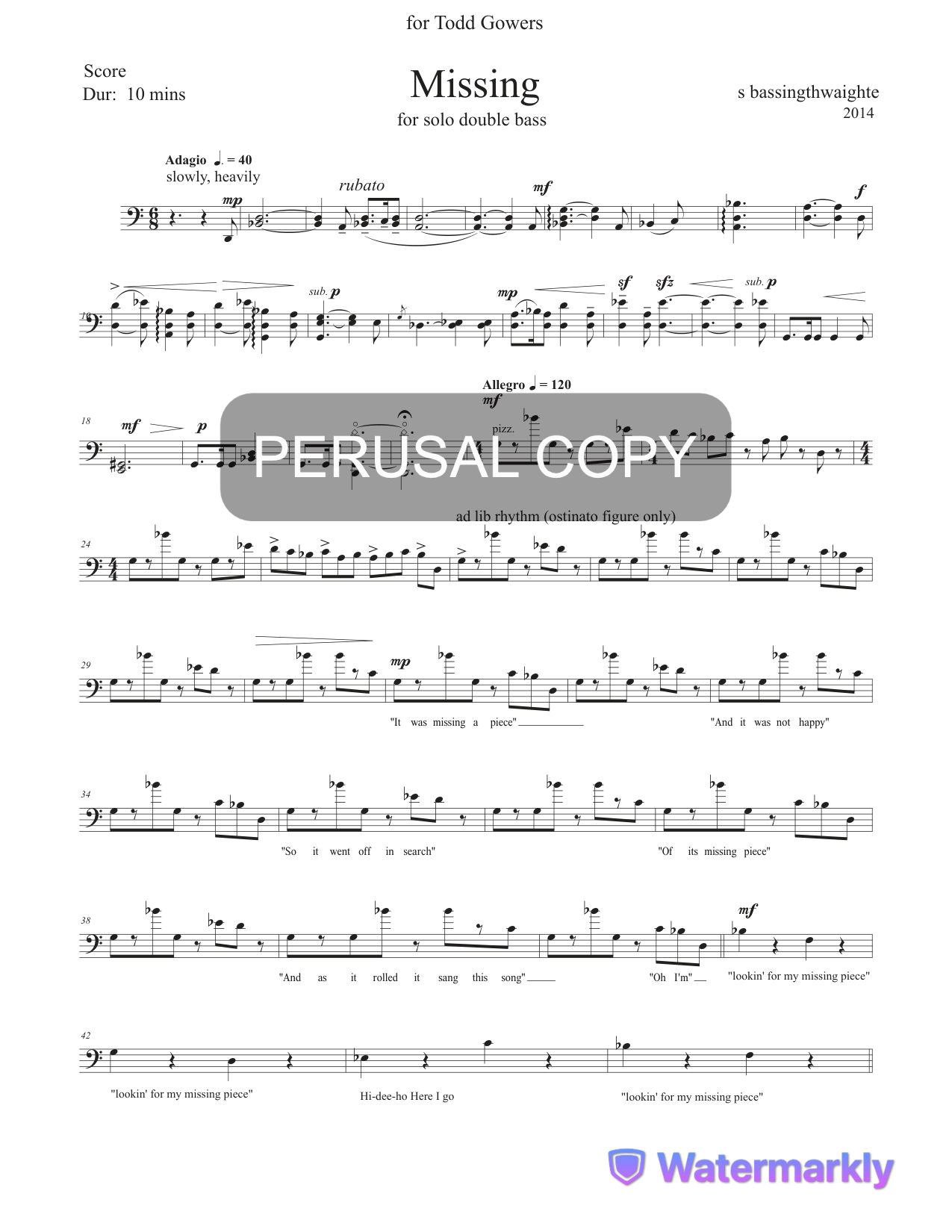
Missing is a setting of the text of “The Missing Piece,” a children’s book by Shel Silverstein. The book contains both humor and wisdom, and I tried my best to capture both of these with the musical setting. The bass player recites the words at the same time as playing, which can be very challenging at times, especially considering that many of the techniques are unusual. The words should be spoken in the same way as one would tell the story – the rhythms and speed and inflections are all up to the discretion of the individual player. The words are placed in the music generally where they should land, with some flexibility. The piece will be most effective when the player is dramatic and “acts” as much as possible. Some of the techniques called for include glissandi, double-stops, triple-stops, harmonics, snap pizz, knocking on wood, playing on the tailpiece, strumming, and random pitches. The performer is encouraged to have fun, and the theatrical element is more important than achieving the exact techniques. Have fun!
No results match your search. Try removing a few filters.