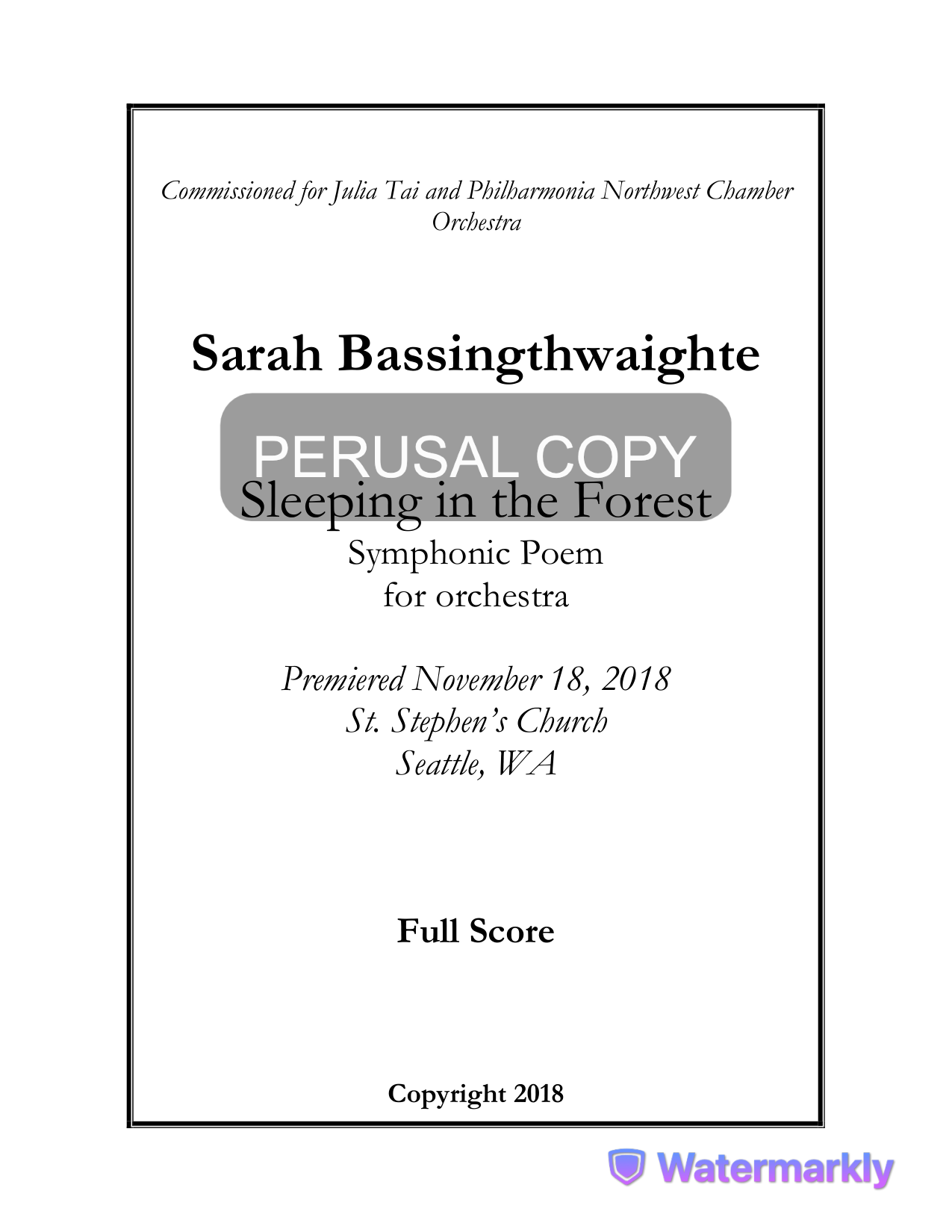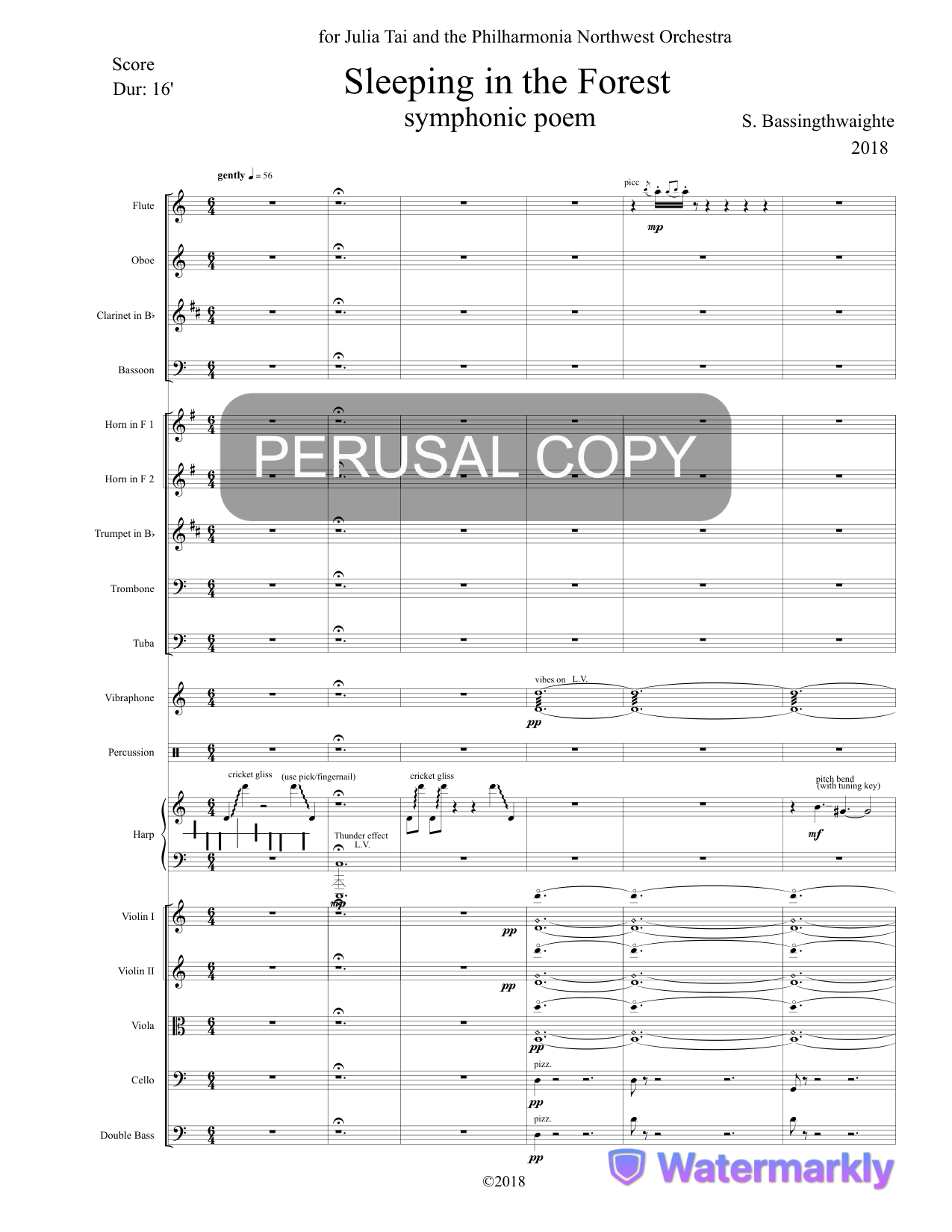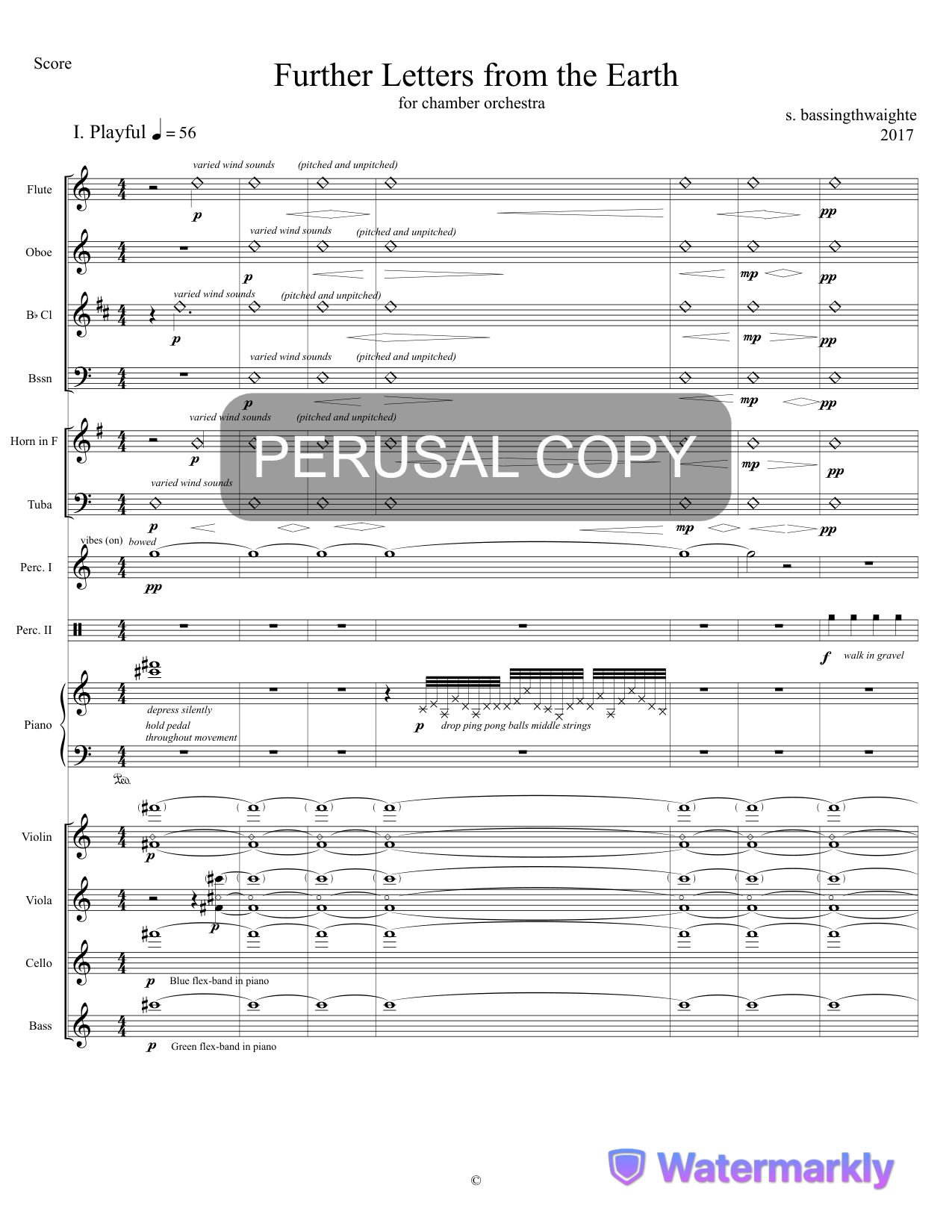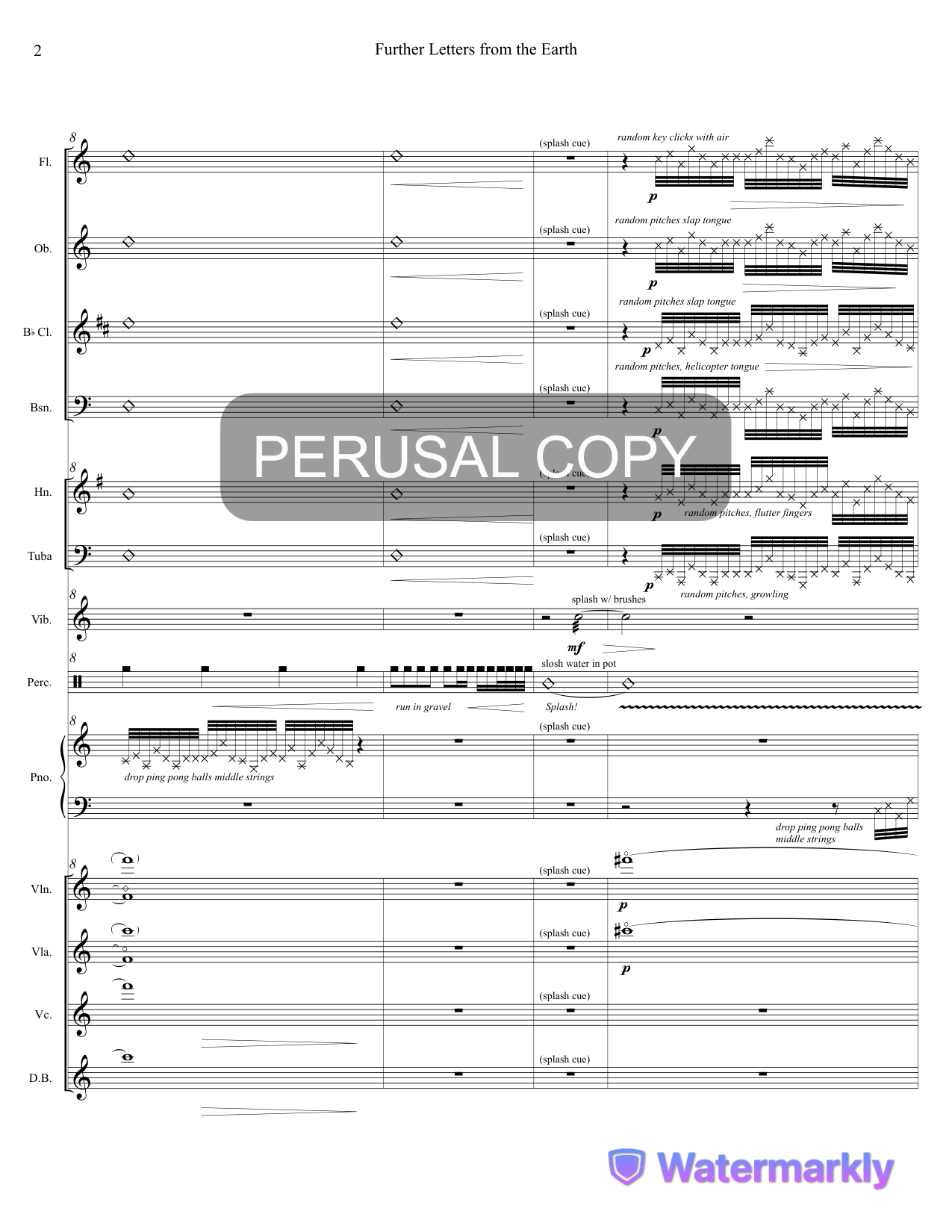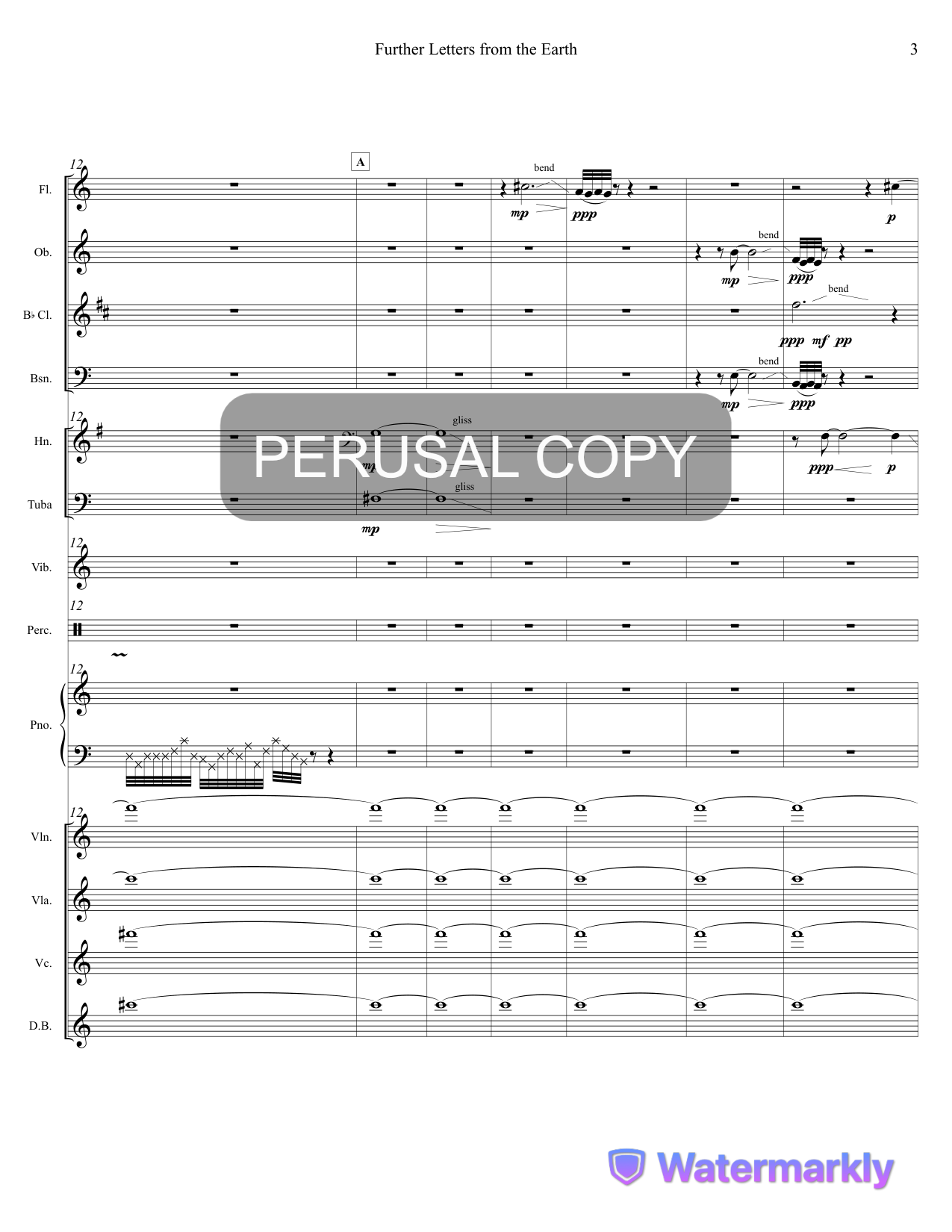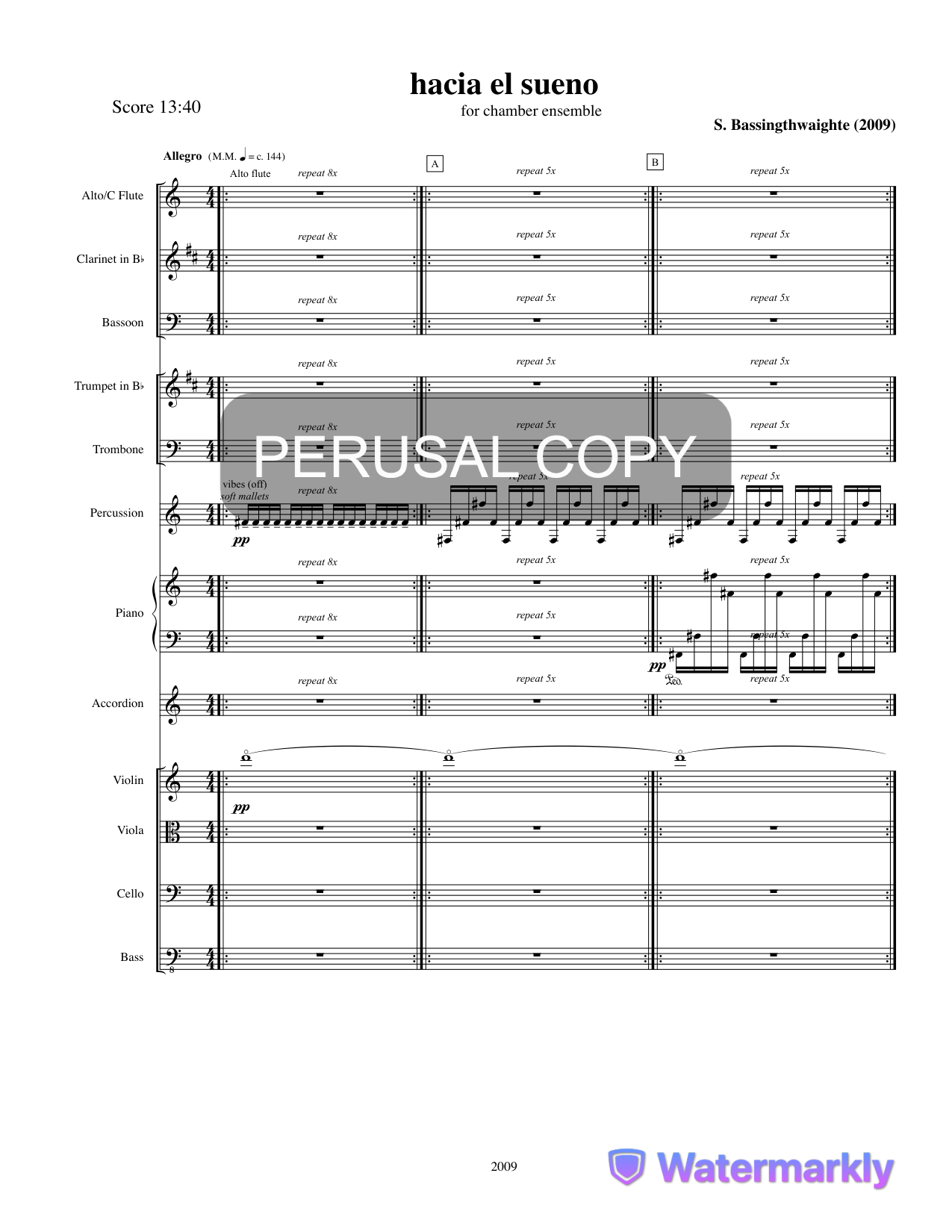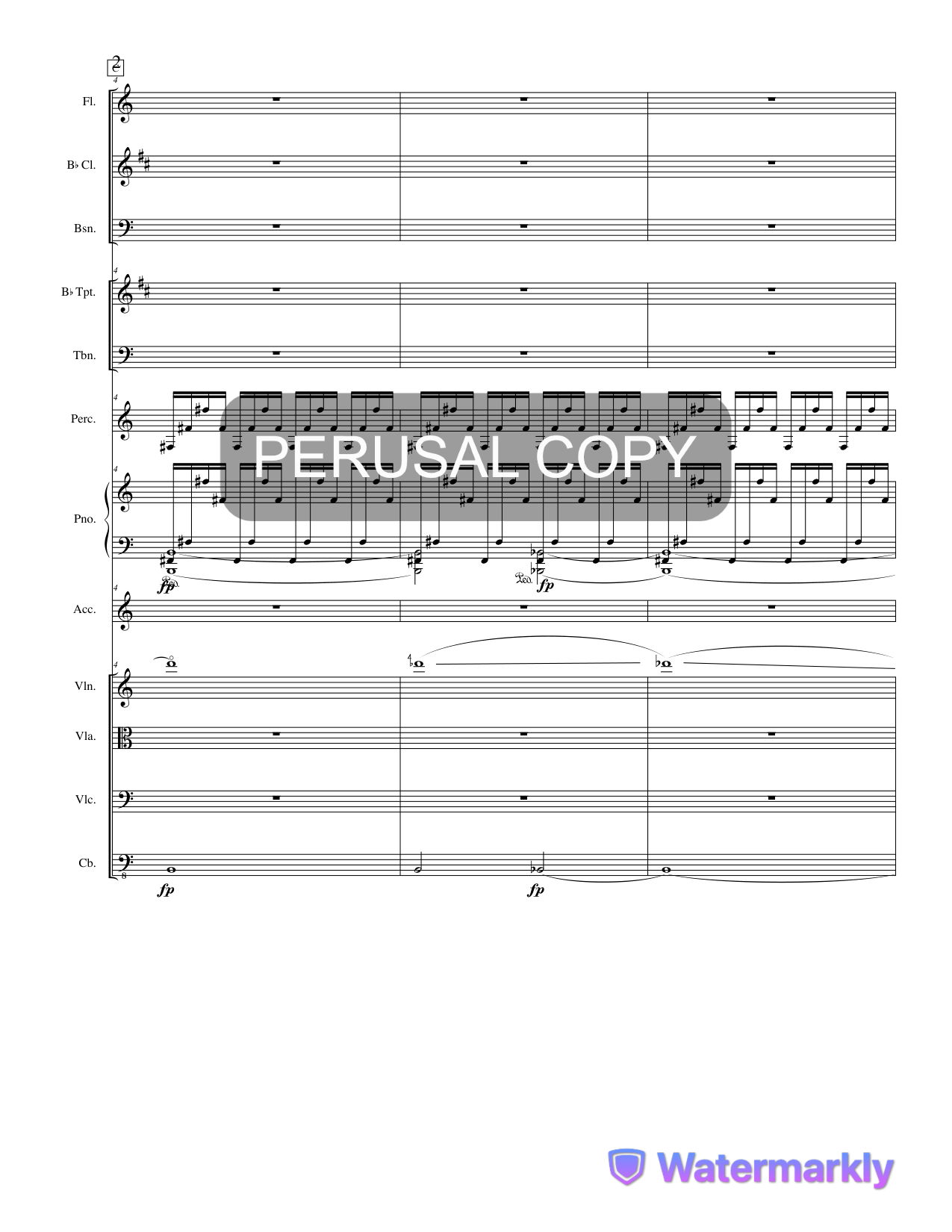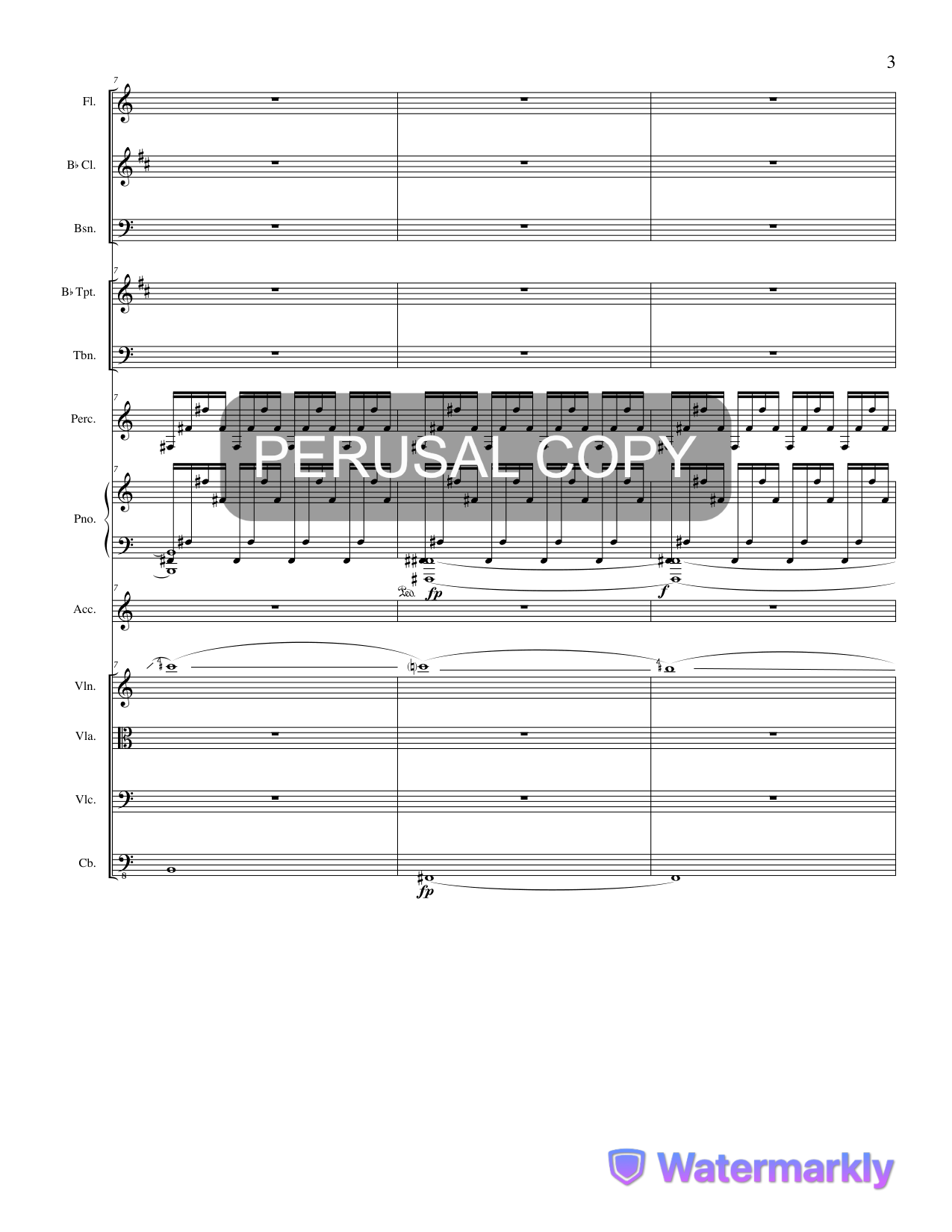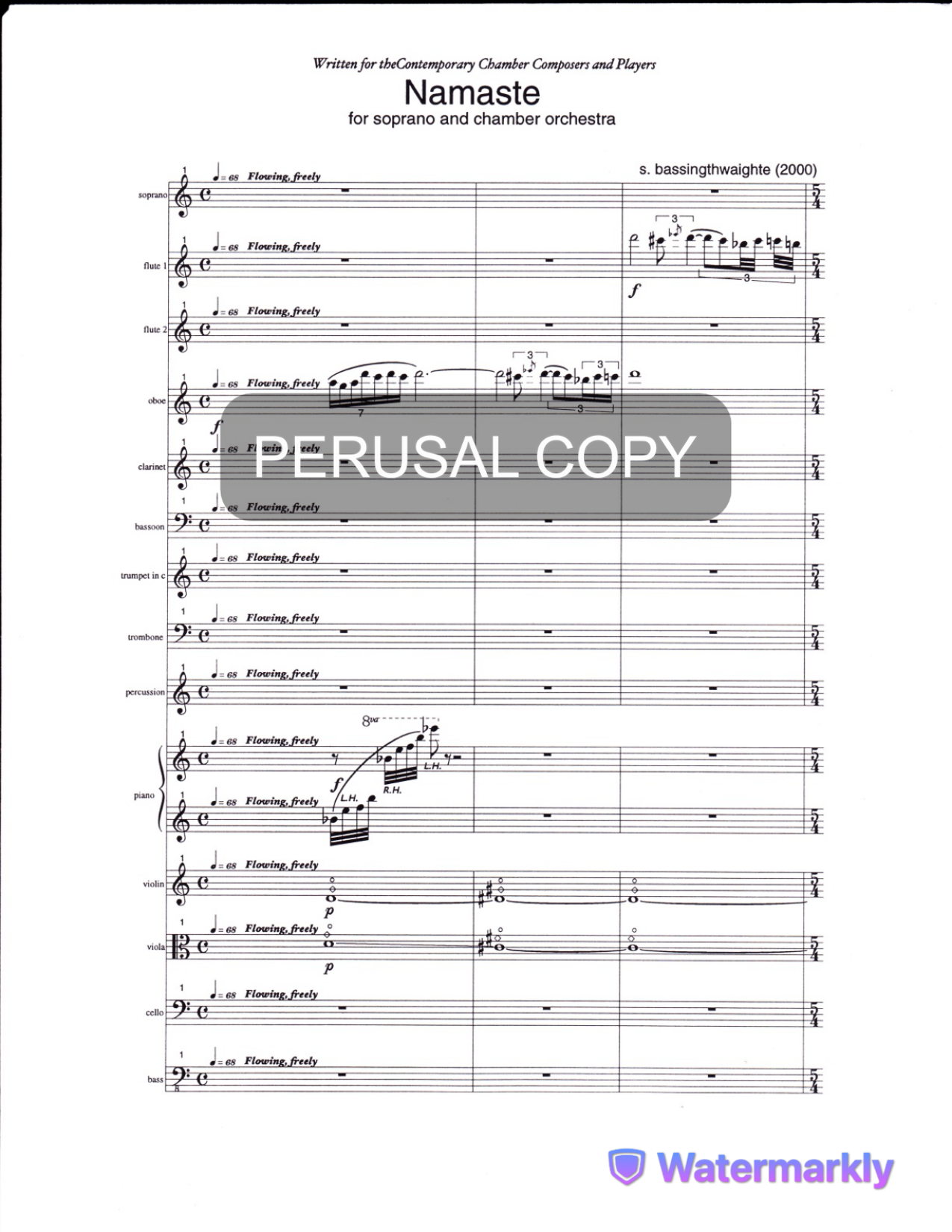
Flute and Symphony Orchestra 2222 | 3221 | 1 perc | strings
(2016)
11 minutes
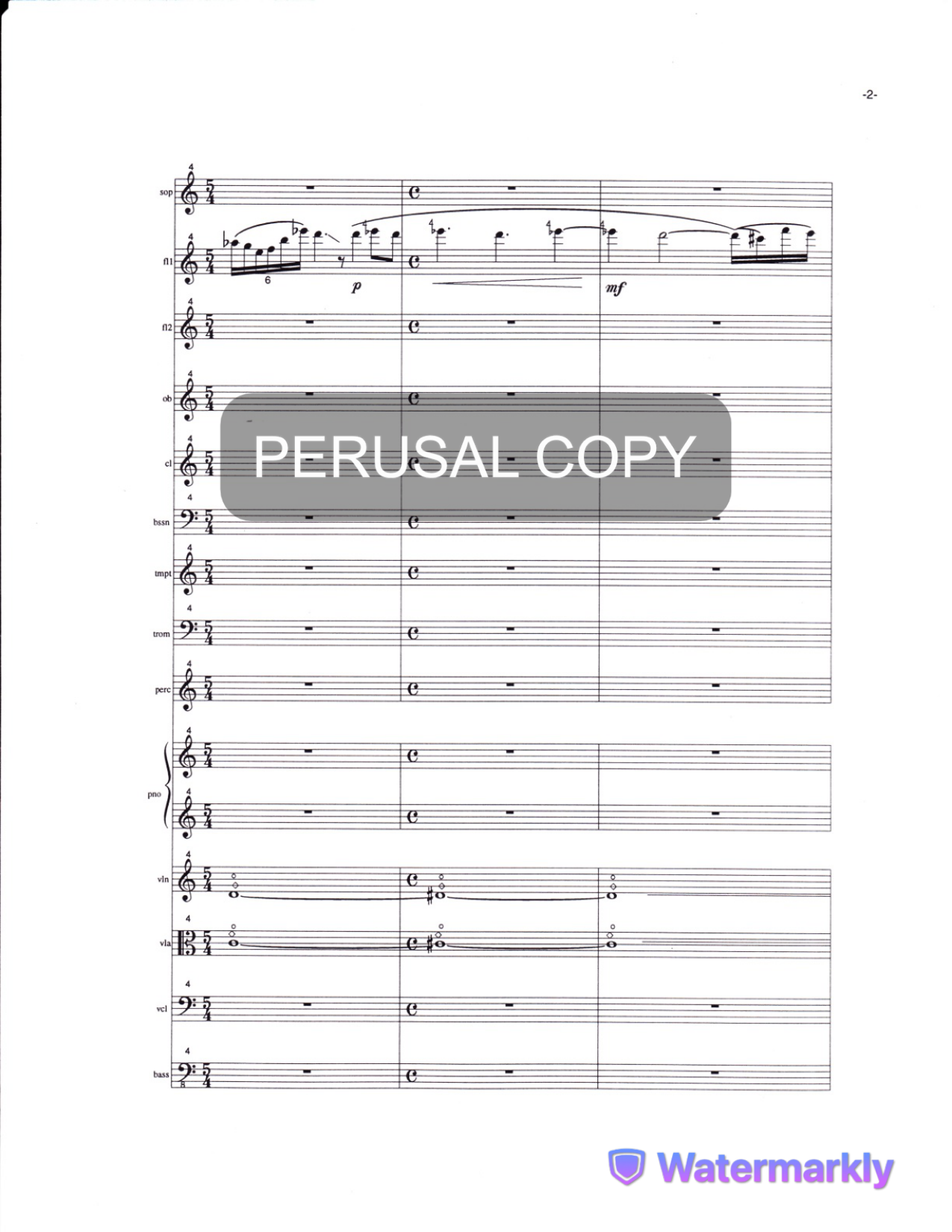
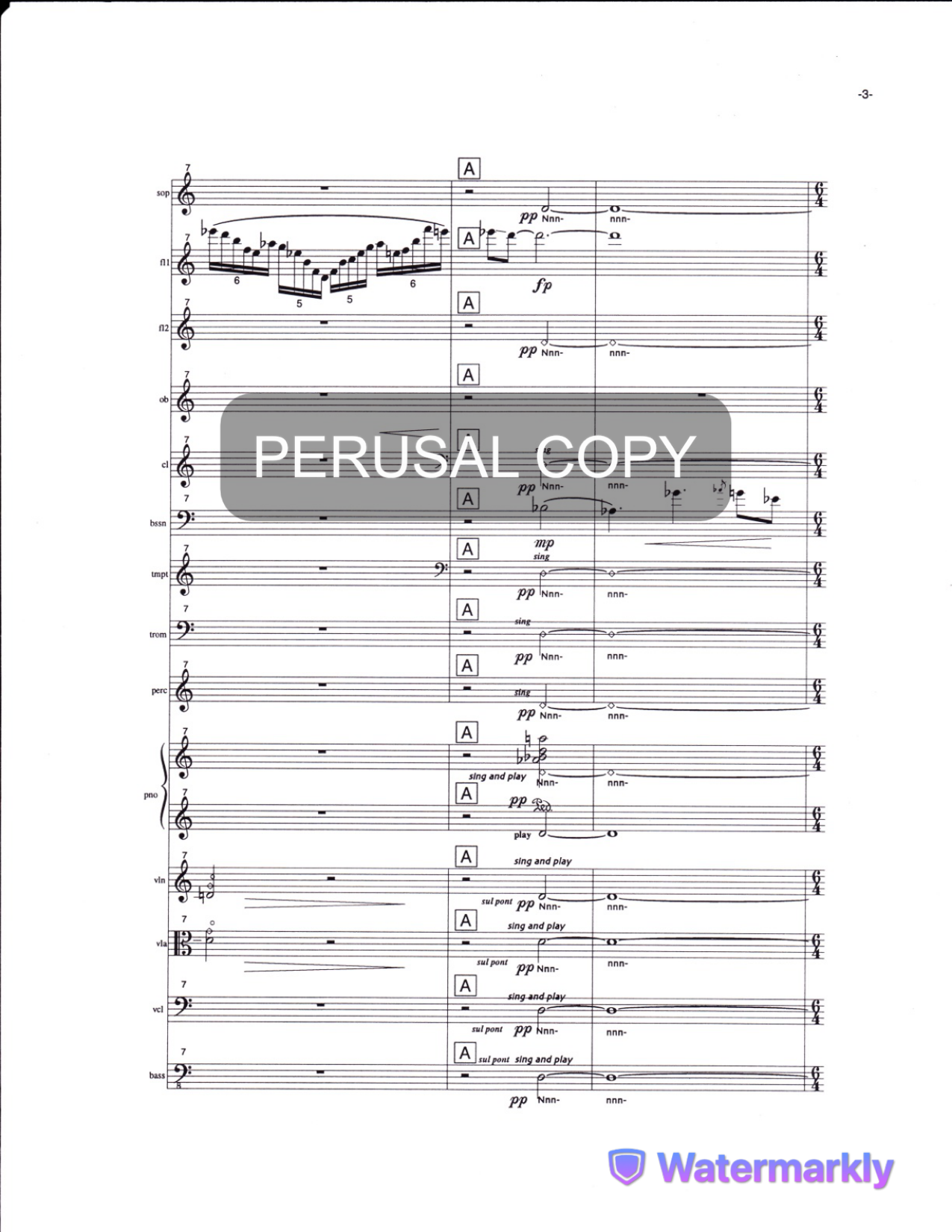
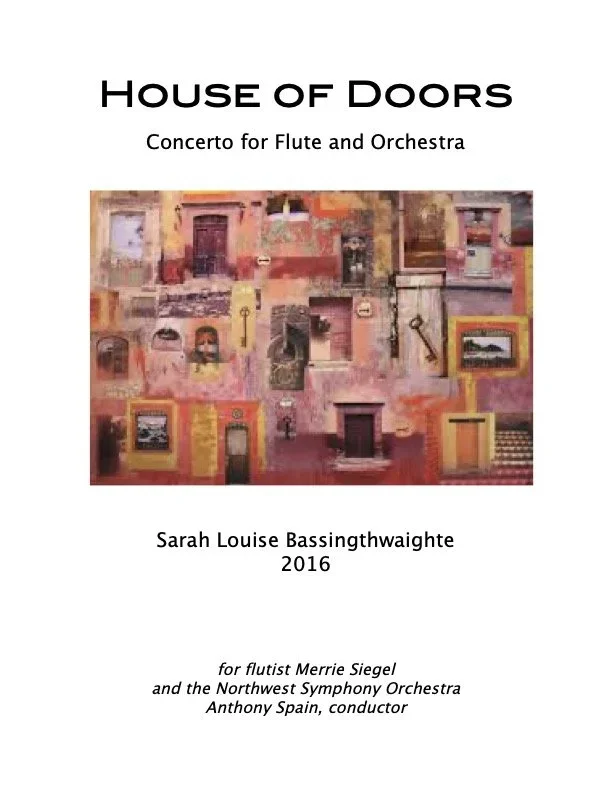
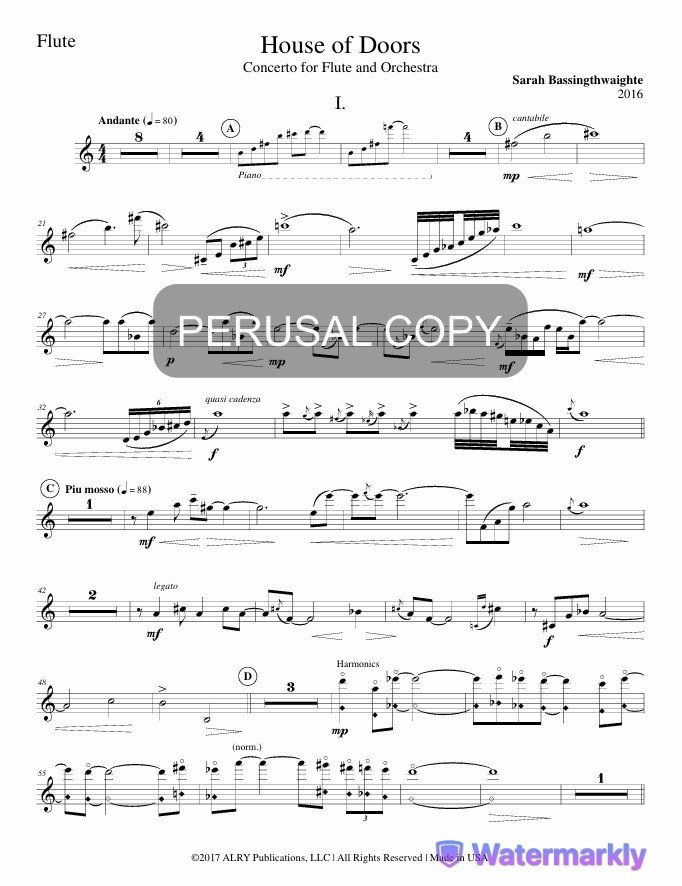
The title, House of Doors, comes from a meditation exercise in which you imagine walking through a hallway full of doors, choosing one, and exploring what's inside. The exercise is designed to increase creativity and the ability to make positive changes. To me, this meditation is fun, like being in a dream where I can make some choices. The starting point for the Concerto came from three different "rooms" I encountered, and each is translated into sound. The piece is divided into two continuous movements.
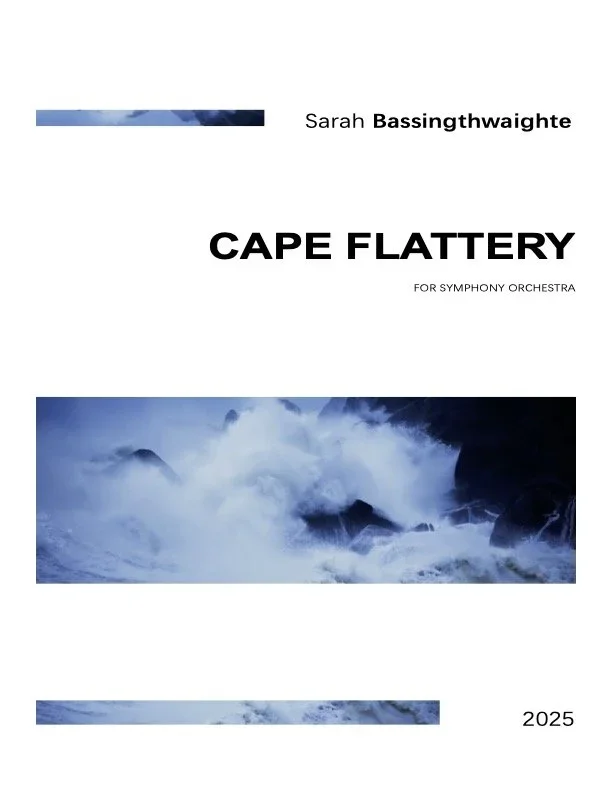
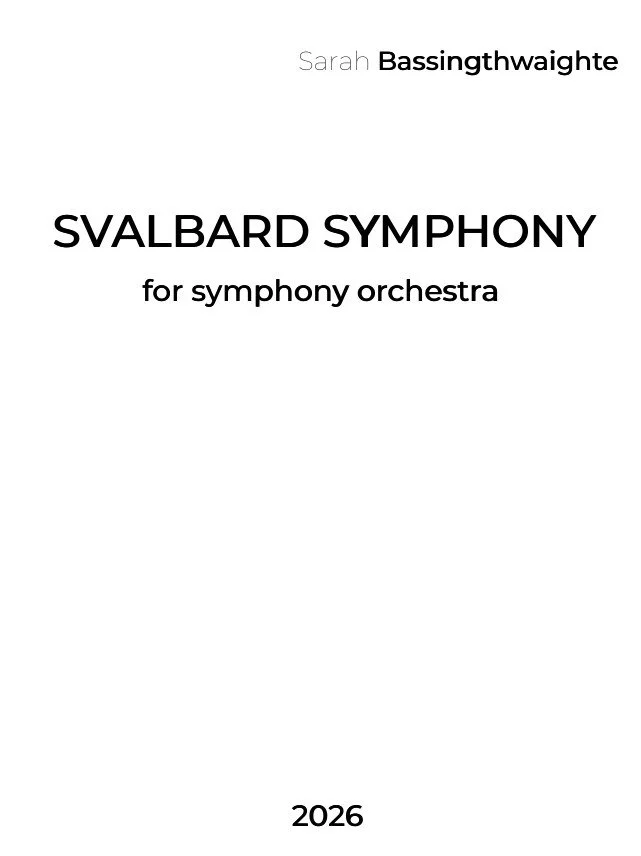
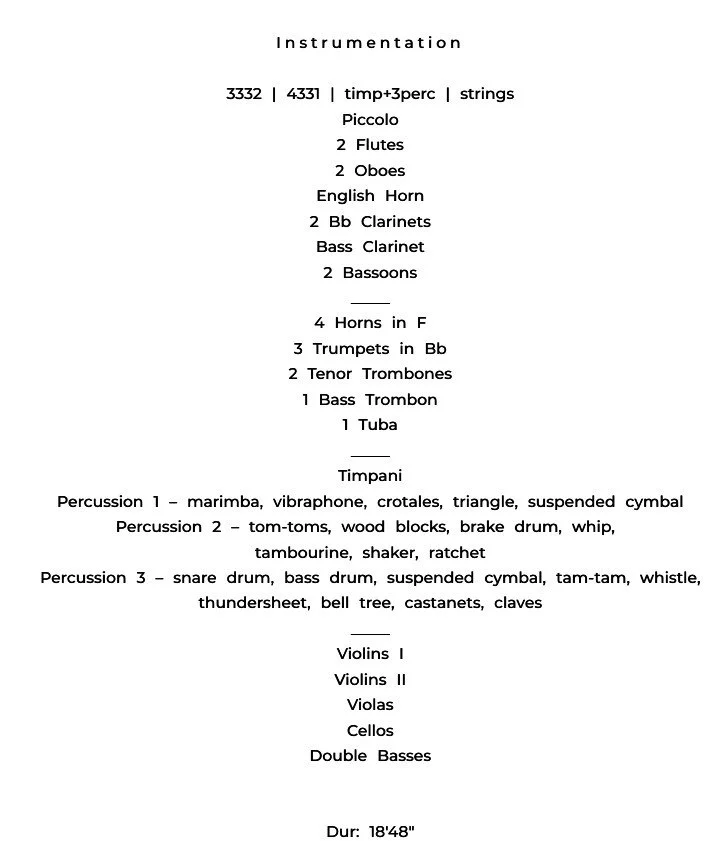
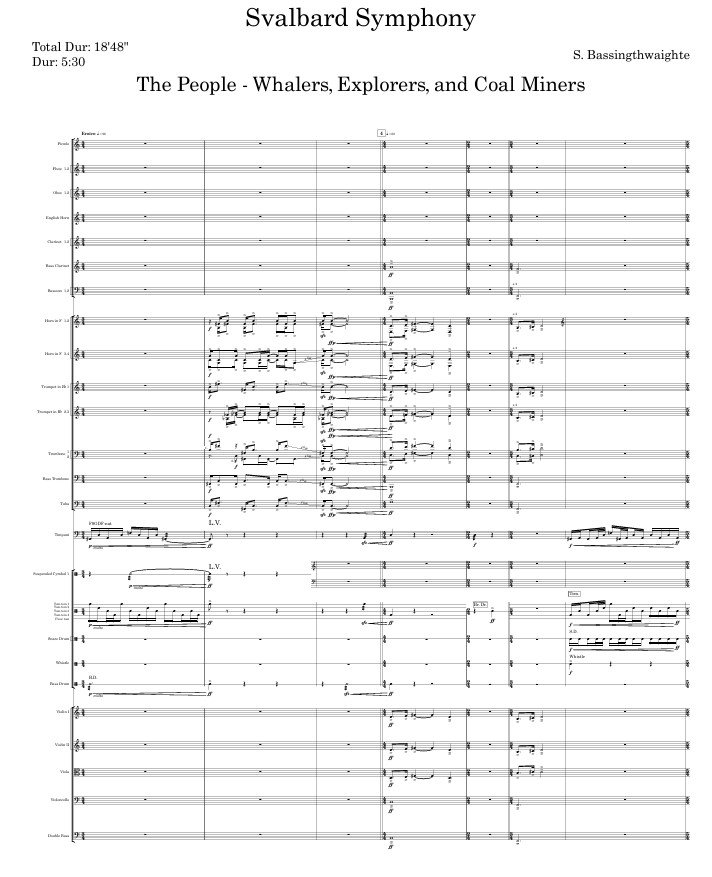
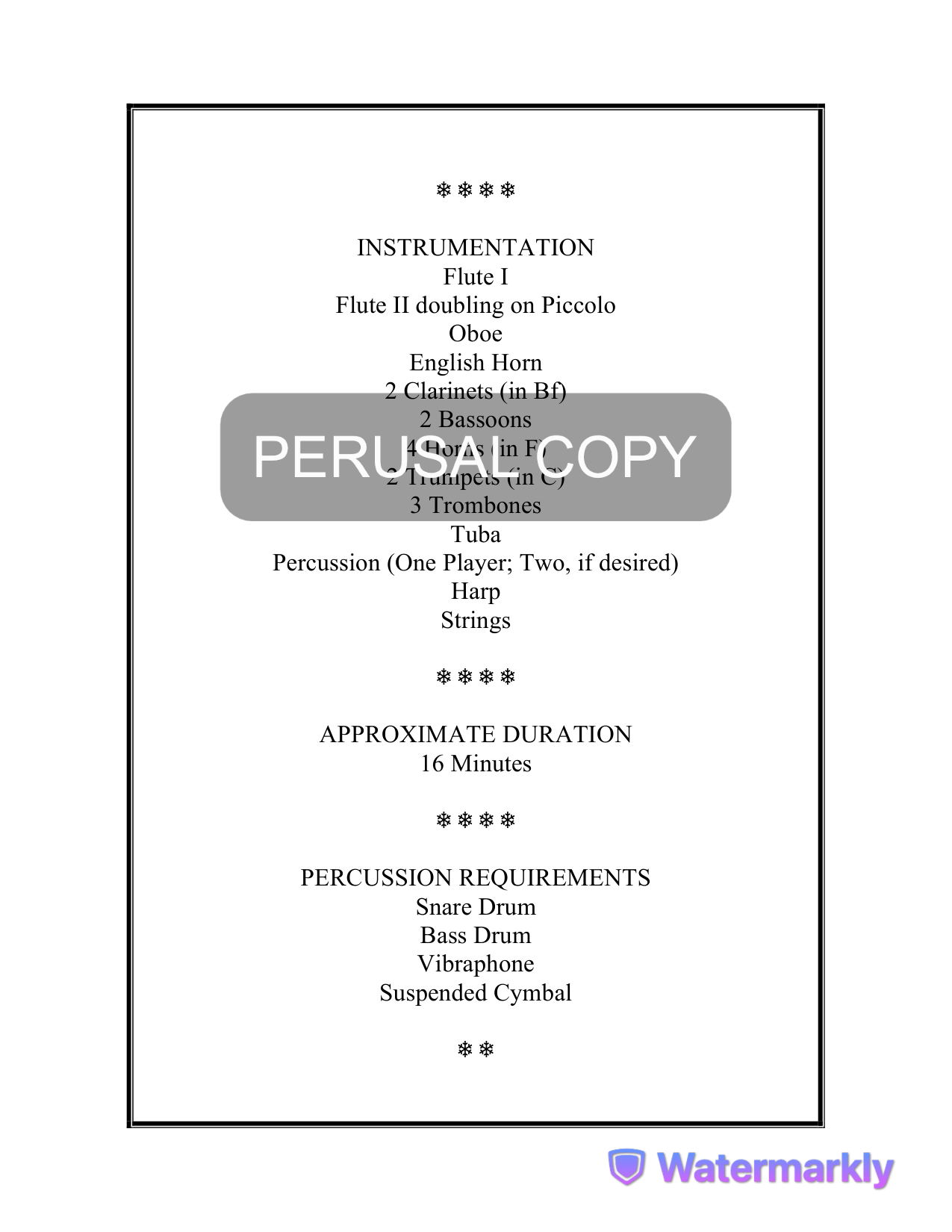
Symphony Orchestra 3232 | 4331 | timp+3perc | harp | strings
(2025)
7 Minutes
Grand Prix Winner of the 2025 European Classical Music Awards 2025, Winner of the 2024 International Saint-Saëns Competition in Orchestral Composition and the 2025 Georges Bizet International Competition
Finalist for the 2025 American Prize in Orchestral Composition
Also available as Wind Ensemble: Picc, 2 fl, ob, eh, 2 cl, bass cl, alto sax, tenor sax, bari sax, 3 tp, 4 horn, 2 tb, 1 bass tb, euph, tuba, piano, timpani, 3 perc.
Finalist for the American Prize in Wind Ensemble Composition 2026
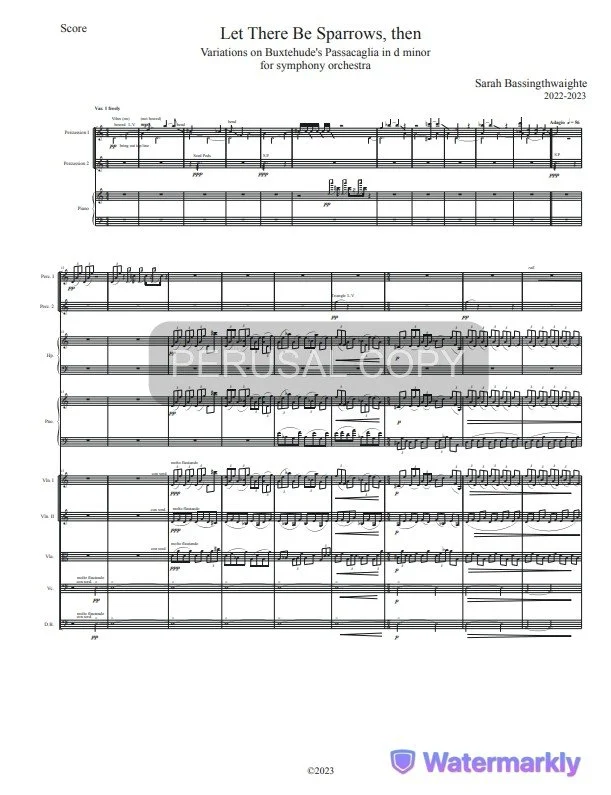
Symphony Orchestra 3221 | 4331 | timp+2 | hp | pno | str
(2022)
11 minutes
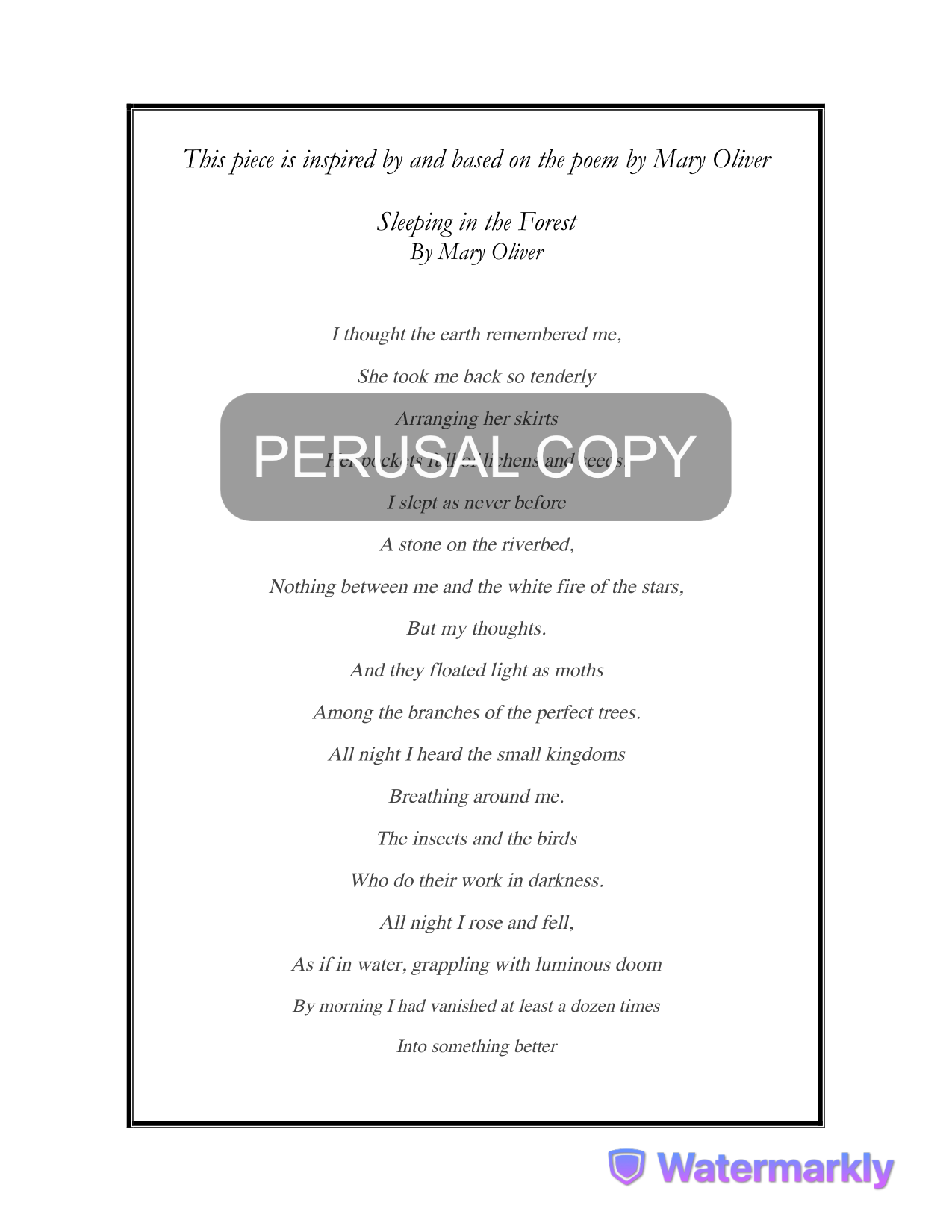
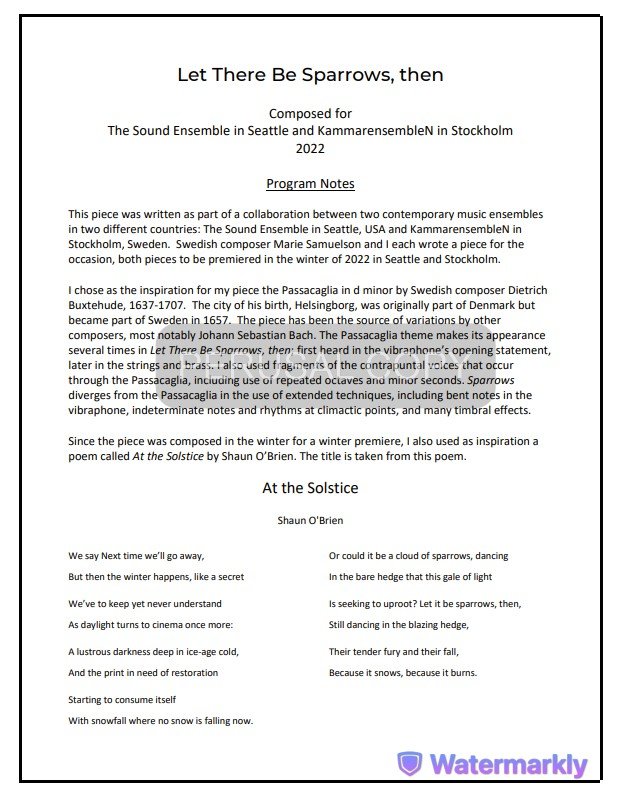
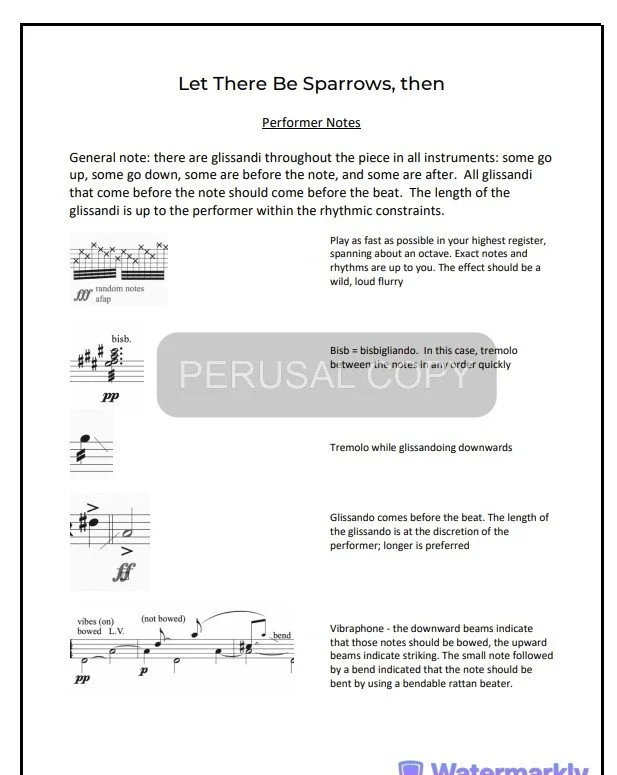
This piece was written as part of a collaboration between two contemporary music ensembles in two different countries: The Sound Ensemble in Seattle, USA and KammarensembleN in Stockholm, Sweden. Swedish composer Marie Samuelson and I each wrote a piece for the occasion, both pieces to be premiered in the winter of 2022 in Seattle and Stockholm. I chose as the inspiration for my piece the Passacaglia in d minor by Swedish composer Dietrich Buxtehude, 1637-1707. The city of his birth, Helsingborg, was originally part of Denmark but became part of Sweden in 1657. The piece has been the source of variations by other composers, most notably Johann Sebastian Bach. The Passacaglia theme makes its appearance several times in Let There Be Sparrows, then; first heard in the vibraphone’s opening statement, later in the strings and brass. I also used fragments of the contrapuntal voices that occur through the Passacaglia, including use of repeated octaves and minor seconds. Sparrows diverges from the Passacaglia in the use of extended techniques, including bent notes in the vibraphone, indeterminate notes and rhythms at climactic points, and many timbral effects. Since the piece was composed in the winter for a winter premiere, I also used as inspiration a poem called At the Solstice by Shaun O’Brien. The title is taken from this poem.
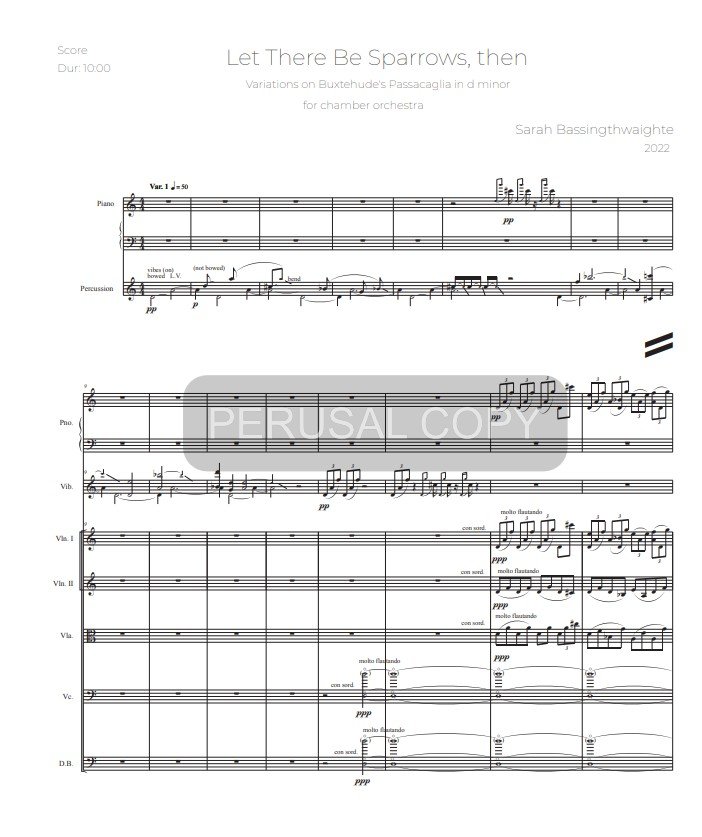
Chamber Orchestra 1111 | 1110 | pno | 1 perc | strings
(2022)
11 minutes
This piece was written as part of a collaboration between two contemporary music ensembles in two different countries: The Sound Ensemble in Seattle, USA and KammarensembleN in Stockholm, Sweden. Swedish composer Marie Samuelson and I each wrote a piece for the occasion, both pieces to be premiered in the winter of 2022 in Seattle and Stockholm. I chose as the inspiration for my piece the Passacaglia in d minor by Swedish composer Dietrich Buxtehude, 1637-1707. The city of his birth, Helsingborg, was originally part of Denmark but became part of Sweden in 1657. The piece has been the source of variations by other composers, most notably Johann Sebastian Bach. The Passacaglia theme makes its appearance several times in Let There Be Sparrows, then; first heard in the vibraphone’s opening statement, later in the strings and brass. I also used fragments of the contrapuntal voices that occur through the Passacaglia, including use of repeated octaves and minor seconds. Sparrows diverges from the Passacaglia in the use of extended techniques, including bent notes in the vibraphone, indeterminate notes and rhythms at climactic points, and many timbral effects. Since the piece was composed in the winter for a winter premiere, I also used as inspiration a poem called At the Solstice by Shaun O’Brien. The title is taken from this poem.
Flute and piano
(2016)
11 minutes
The title, House of Doors, comes from a meditation exercise in which you imagine walking through a hallway full of doors, choosing one, and exploring what's inside. The exercise is designed to increase creativity and the ability to make positive changes. To me, this meditation is fun, like being in a dream where I can make some choices. The starting point for the Concerto came from three different "rooms" I encountered, and each is translated into sound. The piece is divided into two continuous movements.
Symphony Orchestra 2333 | 4331 | timp+3 | harp | strings
(2012)
20 minutes
▶️ Listen to Movement I
A Mountain Symphony is a tribute to the incredible Cascade Mountains that are right here in our back yard. Most of the sketches for the piece were written at Spider Gap, 7995 feet up, in a little tent in a cave overlooking Spider Glacier and the valley below. Many of the sounds I experienced while there found their way into the piece – the cracking of the glacier as it shifted, the cascading water of the nearby waterfall, the wind coming up through the valley, the birds and insects. I was also affected by the way time felt like it moved differently up there – a much larger scale than my daily human scale of movement, rushing around on the surface of the planet. I felt aware of the time that existed before me and will after me, and the vastness of the mountains and the earth.
A note on the context of the writing of this piece: in 2012, as I worked on this piece, my mom was very involved and interested. She would call every day and ask how it was going, listen to parts of it, offer her advice (which was very helpful!). She was invited to the dress rehearsal, but got distracted by a phone call from her sister. The next day, she died suddenly accidentally, and missed the premiere by a few days. This piece is dedicated to my mother, Joan Elizabeth Graham Bassingthwaighte.
No results match your search. Try removing a few filters.